

“I only did six. How does your system say seven? I kept my own count. I have photos on my phone.”
Once that sentence is out, the mood in the room is set. The front desk pulls out the registration book, its corners curled from use, and points: “It's written right here.” The client looks down at a scrawled line and says, “Who wrote this? I didn't sign anything.” The consultant usually chips in: “You did come that time. You even said you were in a rush that day.” The problem is that sentence isn't recorded anywhere.
Three people, three versions, and none of them is false. The front desk really did write it down. The client really did keep count. The consultant really does remember. But these three records were never the same record from the start. They just happened to overlap on part of the same events. The one time they don't overlap, you have a dispute.
I'm Johnny Yang of Brightstream Technology in Taiwan. I've led teams doing implementation for seven years, across 252+ projects in 32+ industries. Medical aesthetics, beauty salons, hair salons, massage, gyms — businesses that collect payment up front and deliver in sessions. The package disputes I've seen in these businesses almost all look the same: the owner thinks the client is being petty, when in fact the business has two or three conflicting sets of books in-house. The client is just the first one to notice.
Here's the conclusion up front.
A dispute over session deductions is not fundamentally about “who got it wrong.” It's about the same event existing in multiple records that are never synced. The fix has three layers. Layer one: complete the fields in each deduction record — time, staff member, treatment, units deducted, balance remaining, and how the client confirmed. Miss any one of the six and it can become a dispute. Layer two: lock down the package rules before you sell — whether free or paid sessions are deducted first, how mixed packages convert, how upgrades and downgrades settle, how staff-request surcharges are added, how expiry is handled. If you don't define these five in advance, they'll get defined later by arguing. Layer three: move confirmation forward to the moment the client is still on site. A record entered after the client has left carries half the weight. And let me be clear up front: a system will not make disputes disappear. It only turns them from “your word against mine” into “there's a record to check.” That's what you're actually paying for.
The problem isn't a petty client, it's three sets of books for one event
Every time I visit a site, I ask one simple question: “How many sessions does this client have left, and where do you look that up?”
The answer is usually “The front desk has a book.” Then I ask: “Does that book match the amounts in your POS?” The owner pauses. Then: “If the book doesn't match what the client recorded, how do you decide who's right?” The answer is almost always the same: “Well… depends. Usually we go with the client, otherwise there's a fight.”
That “go with the client” is where the leak starts. It isn't goodwill. It's the only way to stop the bleeding when you have no evidence. And clients learn it — once they find out that a dispute gets them a free session, disputing becomes predictable behavior. You think you're protecting the relationship. You're actually training the market.
What the three sets of books look like
Book one: the front desk's handwritten registration book. It's fast. The downside is it only remembers “came in,” not “what was done, who did it, how many units were deducted.” And a handwritten book has no version control. You can't tell who changed something or when. When a client points at a line covered in correction fluid and asks what it is, you won't have an answer.
Book two: the consultant's memory and private messages. The consultant is often the one who knows what really happened — she remembers the client adding a treatment at the last minute, the time the machine acted up and only half the session got done, the verbal promise to make one up. The problem is all of it lives in her LINE threads and her head. While she's there, you can ask her. When she's on leave, you can't look it up. When she quits, you never can. This is the same disease as customer leads walking out the door. I covered why systems where “the data lives in people” eventually break in /blog/crm-fail.
Book three: the client's own count. Clients use the most basic and hardest-to-rebut methods — expense-tracking apps, phone notes, Google Calendar, photos. Her record isn't necessarily accurate, but her record is timestamped, and your handwritten book isn't. If it comes to a real fight, which looks more like evidence: a timestamped screenshot, or an unsigned handwritten line?
The key problem with the three books isn't which one is more accurate. It's that there is no point at which they are ever forced to reconcile. Without a reconciliation mechanism, errors pile up, and they pile up where you can't see them, until the day the client decides to sit down and tally everything.
How the errors grow
No outrageous mistakes required. Everyday operations are enough to create errors:
- The client came in but didn't get a treatment, just a consultation, and the front desk ticked a line anyway.
- Two areas treated in one visit. One person logs it as one, another as two.
- The machine broke down halfway and a make-up was promised, but there's no field to record the “make-up.”
- The client brought a friend, and both treatments ended up on the same registration sheet.
- It was busy, so treat now, log later — then nobody logged it before closing.
- At shift change, the previous shift says “I already deducted that,” and the next shift deducts it again.
Each one of these is small on its own. What they share is this: at the moment it happened, no tamper-proof record was made. Everything relies on memory after the fact. Rely on memory and you get versions.
What a deduction record needs to hold up
I break it into six fields. I didn't invent them. I found them by watching disputes on site — every dispute that wouldn't end turned out, looking back, to be missing one of them.
One: time. Not just the date, down to the hour and minute. A date only proves “she came in that day.” The time is what matches the client's memory of her schedule. If the client says “I was in a meeting at 3 p.m. that day,” a timestamp lets you check. Without it, it's your word against hers.
Two: staff member. Who did it. This field matters beyond disputes — it's also quality traceability. If a client says one session worked especially well or especially badly, you need to find the person. And if requesting a specific staff member costs extra, this field is the basis for the charge.
Three: treatment. What was done. Not a broad category like “facial care,” but down to an identifiable item. Packages often mix items with different unit prices. If the item isn't clear, the units deducted have no basis.
Four: units deducted. This is the field most people miss. Many only log “came once,” but one visit is not one session. The same visit might deduct one session, half a session, two sessions (two areas treated), or points instead of sessions. You have to record explicitly “how much was deducted this time,” not work it out backward from the visit count.
Five: balance remaining. What's left after the deduction. This field does on-the-spot reconciliation — the client sees the remaining number, raises no objection, and that entry counts as confirmed. If you only log deductions and not the balance, the client always finds the mismatch when she's almost out. By then you're reconstructing a dozen-plus visits, and there will be a fight.
Six: how the client confirmed. This field decides whether the other five are worth anything. Without confirmation, the first five are just your side of the story. Confirmation can be a signature, a text message, an app notification marked read. The format is negotiable, but there must be a trace that the client “saw it.”
Comparison: records that don't hold up vs. records that do
| Item | Doesn't hold up | Holds up |
|---|---|---|
| Time | Date only, or entered in a batch at the end of the week | Entered at the visit, with hour and minute; later edits leave an edit log |
| Staff member | Blank, or a nickname like “Mei” | Tied to a staff account; who logged it and who performed it recorded separately |
| Treatment | Broad categories like “care” or “course” | Mapped to a specific treatment item code |
| Units deducted | Only “came once” | Explicit: “1.5 sessions deducted this visit / 300 points deducted” |
| Balance remaining | Not recorded; calculated only when the client asks | Balance shown after every deduction, visible to the client on the spot |
| Client confirmation | A verbal “OK,” or nothing at all | Signature / text / app notification, leaving retrievable proof |
| Edits | Covered with correction fluid and rewritten | Original kept; a separate adjustment entry noting the reason and who handled it |
I want to call out that last row. Allowing edits is fine. Edits that leave no trace are the problem. There will always be mistakes on site. A good mechanism doesn't forbid edits. It makes sure anyone can see “what it was originally, who changed it, and why.” A handwritten book can't do that. Neither can Excel — that's the core of /blog/excel-management-limit: Excel's problem was never computing power. It has no ownership, no versions, no audit trail.
The traps in package design: if the rules aren't locked down first, you'll fight later
This is the part I most want to talk about. The record fields above are an execution problem. The five questions below are a design problem. If the design isn't defined clearly, no amount of good execution will stop disputes — because even you don't know what the right answer is.
1. Buy ten, get two free: how are the free ones deducted?
Say a client buys ten sessions and gets two free, twelve in total. After six sessions she wants a refund.
Were the six she used “six paid sessions” or “five paid plus one free”? The difference at refund time is significant, and both sides can make a reasonable case.
Deduct free sessions first: the client feels “you used up the free ones first, so my paid sessions are still there and I should get more back.” Businesses usually don't like this. Deduct paid sessions first: by the end, everything left is a freebie, and if she wants out, she feels “all the money I paid is used up, so I get nothing back.” Deduct proportionally: each visit deducts a fixed ratio of paid and free. The fairest calculation, and the hardest to explain to a client.
None of the three is “right,” but you have to pick one, and it has to be written down and explained to her before she signs. I've seen too many businesses think seriously about this for the first time when someone asks for a refund. At that point, whichever answer you pick, the client will believe you chose it to refund less.
2. How mixed packages convert
If a package mixes items with different unit prices, you either use a points system or a per-item session system.
A points system converts each treatment into points. The client buys a bundle of points and each treatment deducts a set amount. It's the most flexible, and clients most easily accept “I want to switch to something else.” The trap with points: if the points-to-cash rate can change, you'll be challenged. Today treatment A costs 200 points. Six months later you change it to 250, and existing clients' points have just shrunk. You must agree in advance “whether the conversion rate on packages already sold is locked.”
A per-item session system lists “five sessions of treatment A, three of treatment B” in the package, each deducted separately. Clear, but rigid. If the client wants to swap unused B for A, you're negotiating on the spot again.
My recommendation: use points for flexibility if you want, but lock the conversion rate at the moment of sale, and show both the points and the equivalent treatment sessions in the record. Clients understand sessions, not points. Systems can calculate points, not gray areas. Give both.
3. How upgrades and downgrades settle
A client halfway through wants to upgrade to a pricier package, or drop back to a cheaper one. How do you value the part already used?
The usual sticking point: when upgrading, are the used sessions from the old package valued at “list price” or “package average price”? Use list price and the client finds the discount completely eaten up and feels cheated. Use the average and the business feels it lost out.
Again, there's no standard answer, but the plan description must state up front “on upgrade, the used portion is valued at which price.” And an upgrade should open a new record linked to the old package, not overwrite the old one. Once the old package is overwritten, you'll never be able to say clearly what was bought originally.
4. How to record staff-request surcharges
Requesting a senior staff member usually costs extra. The surcharge can be cash, extra points, or an extra fraction of a session deducted. Any of the three works, but watch two things.
First, show the surcharge separately on the deduction record. When the client sees “1.2 sessions deducted this visit,” she'll ask why it isn't 1. You need to answer on the spot: “Because you requested a specific therapist. That's an extra 0.2 session, as written on your plan.” If the record only shows 1.2, you're left explaining it verbally.
Second, the request record must match the staff member field. I've seen the log say “requested” while the staff field shows someone else, because the requested therapist called in sick that day and someone filled in. If nobody goes back and fixes that entry, the client will check later and ask: “I paid extra to request her and she didn't do it. What about the extra I paid?”
5. How expiry is handled
Whether a package expires and what happens when it does is the easiest thing to fight over, and the one I most want to warn you about.
This falls under contracts and regulations. Have a lawyer confirm it against current rules. I won't comment on how to word an expiry clause legally, whether a package can lapse after expiry, or whether you can charge an extension fee. I'm not writing that, and I suggest you don't copy answers you found online either.
But one thing has nothing to do with law. It's purely a management problem, so I can talk about it: your system or records must be able to show clearly “when this package was sold, what validity period was agreed, how many sessions are left, and when it was last used.” Without those four, you can't enforce anything no matter what the contract says, because you don't even know how many of your packages are about to expire. Plenty of businesses only discover nobody was tracking this when a client shows up with a receipt from three years ago.
What the five have in common
All of them are questions where twenty minutes of thinking before you sell saves hours of arguing later. But almost no business spends those twenty minutes, because at the moment of sale everyone is happy and nobody wants to talk about refunds and expiry.
My approach is simple: turn these five questions into a table. Every package plan must have all five cells filled before it goes on sale. If you can't fill them, you can't sell it. That table is also the explanation the client sees when she signs, not fine print on the back of the contract.
On site: confirmation must happen while the client is still there
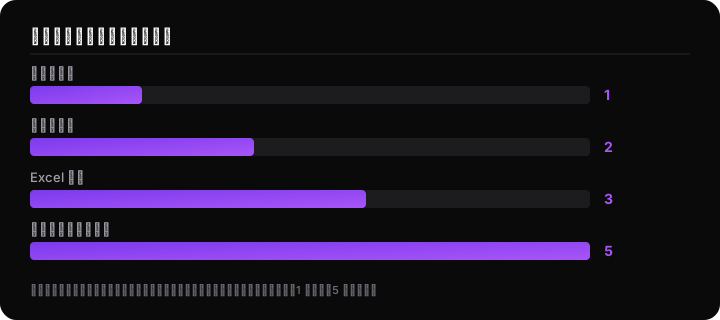
However complete everything above is, if confirmation happens after the client leaves, it loses half its weight.
The reason is simple. When the client is on site and you show her the remaining sessions and she doesn't object, that's on-the-spot confirmation. When she gets a message three days later saying you deducted a session last Wednesday, she can't recall the details of that day and can only choose to believe it or not — that's after-the-fact notification. The first is mutual agreement. The second is a one-sided claim.
Why “treat now, log later” has to go
I know what it's like on site. The client rushes out the moment she's done. The front desk is taking payment, booking the next visit, and answering the phone at the same time. Logging easily gets pushed to last. When it's time to close up, you find three clients' records weren't entered and you fill them in from memory.
Backfilled records have two fatal flaws. First, the timestamp is wrong — it records when you entered it, not when the treatment happened. Once the client pulls out her schedule to compare, your record becomes evidence against you. Second, the client isn't there when you backfill, so the confirmation field is always empty.
During implementation I usually set one hard rule: deduction and confirmation happen before payment, not after. Payment is the one thing a client will always stop for. Tie the deduction confirmation into the payment flow and it won't get skipped. If the package is prepaid and nothing is paid that visit, tie it to booking the next appointment. Either way, find a point where the client is guaranteed to stop and hang it there.
Pros and cons of three confirmation methods
| Confirmation method | Pros | Cons | Best for |
|---|---|---|---|
| On-site signature (paper or tablet) | The client sees it and signs it herself, the strongest evidence; doesn't depend on her phone or internet | Paper must be stored and filed, slow to retrieve; tablet signatures must be firmly tied to the record | High-priced packages with many sessions and high refund risk |
| Text message | Nearly every client receives it, nothing to install; the carrier keeps a delivery log | One-way notification, not the same as the client “agreeing”; she may not read it; costs money to send | Businesses with a wide client age range where asking clients to install an app isn't practical |
| App push / official account message | Can report read status; clients can check remaining sessions themselves anytime, fewer phone inquiries | Requires the client to install the app or add the account; a client who doesn't has no confirmation | Businesses with frequent repeat visits and clients used to managing things on their phones |
My recommendation: don't pick just one. On-site signatures handle agreement in the moment. Push notifications or texts handle checkability afterward. They do different jobs. A signature settles who has evidence when a dispute happens. Push notifications keep disputes from building up until they explode — because the client gets her balance every time, she'll notice something's off on the second visit, not the twelfth.
One more detail many people miss: let clients check for themselves. If a client can open a page anytime and see “how many sessions I have left and when each one was deducted,” your front desk gets fewer calls and disputes surface earlier. Early disputes are much cheaper, because then you're one session apart, not seven.
The knock-on effect on refunds: if sessions used weren't agreed in advance, it's just a shouting match
When a client asks for a refund, the whole thing instantly becomes arithmetic. And arithmetic assumes both sides agree on the formula.
Let me be clear: how the refund percentage is calculated, which fees can be deducted, how to word contract terms so they hold — this falls under contracts and regulations. Have a lawyer confirm it against current rules. I'm not writing any percentages or citing any article numbers, and you shouldn't be looking for that kind of answer in an online article.
But one part of a refund dispute isn't a legal question at all. It's a data question, and it's often the part that truly never ends: the two sides can't agree on how many sessions were used.
Think about it. However clearly the law is written, if the formula is “the unused portion is handled as agreed,” how many sessions is the unused portion? If the client says six and you say seven, no formula can compute it. Regulations settle how to calculate. Data settles what you calculate with. What you're usually missing is the latter.
So refund preparation actually starts the day you make the sale:
- Every deduction was confirmed by the client, so at refund time there's no room for “I don't accept that entry.”
- The deduction order for free sessions was locked in advance, so there's no fight over “you counted the free ones against me.”
- Upgrades and downgrades each have their own linked records, so you can see what was originally bought and how many times it changed.
- Staff-request surcharges and last-minute substitutions are recorded, so nobody has to remember on the spot.
Get these right and refund negotiation becomes a quiet process: pull up the records, look at them together, plug them into the formula. Get them wrong and you'll find the real battlefield isn't the amount. It's “did she actually come in that day.”
Advice I give often
When a client first buys a package, do one thing besides the contract: go through a “package summary” together on the spot — what she bought, total sessions, free sessions, how free sessions are deducted, validity period, staff-request surcharge rules, whether it can be transferred. Write the summary in words the client understands, not legal language, and give her a copy.
It takes under five minutes, but it moves every question that would be argued later to the moment before any money is collected, when both sides are most patient. It's the highest-return five minutes I've seen.
When to move from a handwritten book or Excel to a system: three signals
I won't tell you that having a book means you should switch to a system. A small shop with simple packages where the owner runs the front desk can manage fine with one book and one Excel file. Spending money on a system at that point is waste. Let me say the thing that works against me first: if you sell only a handful of packages a month, know your clients by name, and have fewer than one dispute a year, you don't need to buy anything. Just add those six fields to your book.
But once any of the three signals below shows up, you've hit the tipping point.
Signal one: you can't work it out anymore, not just slow to look it up
Slow lookups are just an efficiency problem. Five extra minutes flipping through a book is no big deal. Not being able to work it out is a fundamental problem — a client asks how many sessions she has left and two colleagues give different answers. Or you aren't sure yourself and have to recalculate the whole year's records.
Once “one question, two answers” appears, your records have lost their single source of truth. It only gets worse, because every additional wrong entry skews every calculation after it.
Signal two: disputes go from occasional to routine
A dispute once a year is an accident. A dispute once a month is a process problem. And watch how disputes change shape: if clients start keeping their own count, ask you to send them photos, or confirm before any argument has even started, they no longer trust your records.
The moment clients start keeping their own backups, your records have lost their authority. This signal deserves more attention than the dispute count, because it's silent.
Signal three: more people means handovers break
When one person does everything, there's no handover problem. Once you have two shifts, three consultants, and part-timers, the same client is served by different people, and each one judges “how many sessions this counts as” a little differently.
When you find yourself spending time asking “who deducted this and why,” the rules haven't been built into the process. They exist only in senior staff's heads. This is the same class of problem as inventory management, except the item is sessions instead of goods — I discussed in /blog/inventory-vs-erp why “the numbers don't match” is never really a calculation error. It's that the posting moment and responsibility were never defined.
If you do switch, what to look for
If all three signals apply, when you evaluate systems I suggest focusing on these capabilities rather than how pretty the interface is:
- Can deductions be recorded in “units” rather than just “visits”? Does it support half sessions, points, and surcharges?
- Can free sessions have their own deduction order — as a setting, not something someone has to remember?
- Do edits keep the original record and an edit trail, so you can see who changed it and when?
- Can clients check their own remaining sessions, or at least get an automatic notification after each deduction?
- Are there proper ways to handle upgrades, downgrades, and transfers, or do you have to hack it by opening new orders by hand?
I've laid out a more complete set of evaluation angles for medical aesthetics and beauty systems in /blog/medical-aesthetics-clinic-system. If your focus is more on client relationships and follow-up than just deductions, the evaluation framework in /blog/how-to-choose-crm can be used as is.
Honest position: a system won't make disputes disappear
I have to write this section, because it somewhat conflicts with my business.
Owners have told me: “I want a system so clients can't argue with me about this anymore.” I usually answer straight: it can't be done. A system can't stop someone determined to argue, and it can't stop a record that really was entered wrong.
What a system actually changes is the nature of the dispute. Before implementation, the dispute is “you say yes, I say no.” That's a conflict at the level of trust. It can't converge. It ends with someone giving in or a falling-out. After implementation, it becomes “let's pull the record: this entry is March 12, 2:10 p.m., performed by so-and-so, 1 session deducted, and you signed on the spot” — a discussion at the level of facts, usually over in five minutes.
The value of that shift has three levels.
First, handling costs drop. A dispute goes from half an hour to five minutes, and it doesn't drain the store manager emotionally. Count how many scenes that saves you in a year.
Second, the leak stops. The “forget it, go with the client” from earlier is a real cost over a year, and it doesn't show up on any report, because you don't even know how many sessions you've given away.
Third, and most important: internal operating quality gets pulled up in return. When every deduction must be confirmed on the spot, staff stop putting off logging until closing. When edits leave traces, nobody edits casually. When the balance is shown to the client, errors get caught on the second visit, not the twelfth. What a record system really manages is your own team, not the clients.
But I'll finish the other side too: a system faithfully records whatever you feed it. If your package rules aren't clearly defined, the system will just make the chaos tidy, not correct. So the order is always — lock down the rules for those five questions first, then talk about which tool to record them with. Every business I've seen do it the other way around got the same result: six months after go-live, everyone is still using the handwritten book alongside it, because the system has no place for all the real-world “exceptions.”
FAQ
Buy ten, get two free: should the free sessions be deducted first or last?
There's no standard answer. Businesses use all three approaches: free first, paid first, or proportional. The real point isn't which you choose. It's writing down the one you choose before the client pays, explaining it to her, and keeping a record that she saw it. Disputes almost never happen because the rule is unfair. They happen because the rule is explained for the first time after the dispute starts, and the client naturally assumes you're calculating it that way to refund less. My recommendation is to put the deduction order in the “package summary” at the time of purchase, separate from the contract and in plain language, and have the client read it on the spot. The system should also be able to set the order and apply it automatically, not rely on the front desk remembering every time.
The client's count doesn't match ours. How should we handle it?
Don't rush to prove who's right. Step one is to lay out every record you can pull: time, staff member, treatment, units deducted, balance remaining, and confirmation method for each entry. If all six are there and the client's confirmation is on record, go through it entry by entry. If fields are missing, admit honestly that your data is incomplete for those entries and negotiate those specifically. Don't force the whole batch — forcing it turns a single-entry dispute into total distrust. Once that's handled, the more important thing is figuring out why the gap appeared: backfilling, handover, or rules that were never defined. If the same gap happens a second time, you fixed the symptom, not the disease.
If a package expires unused, can it simply lapse?
This falls under contracts and regulations. Have a lawyer confirm it against current rules. I won't give you any percentages or clause wording here. But there's one purely management-side point unrelated to law that I can make: whatever the contract says, you first have to be able to look up, at any time, each package's sale date, agreed validity period, remaining sessions, and last use date. Otherwise you can't enforce any clause. The more practical approach is to proactively work the leads whose packages are approaching expiry, and contact clients to schedule sessions while there's still time left. That's far cheaper than handling disputes after expiry, and far less damaging to the relationship.
Can we use Excel to track session deductions? When do we have to switch to a system?
Small scale, simple packages, one person maintaining it — Excel is completely fine, and I don't recommend spending money just to “look professional.” But Excel has three built-in limits: no division of responsibility, no edit trail, and no way for clients to check for themselves in real time. Switch when these three signals appear: first, two colleagues give different answers to the same question; second, disputes go from occasional to monthly; third, clients start keeping their own backups and asking you to send photos to confirm. The third is the easiest to miss, but it means trust is already draining, and it deserves more alarm than the dispute count.
It's too busy on site. Can we backfill deduction records after closing?
My answer is no, and it's one of the few things I set as a hard rule during implementation. Backfilling has two fatal flaws. The timestamp doesn't match when the treatment actually happened, so once a client compares it with her schedule, your record becomes evidence against you. And the client isn't there when you backfill, so the confirmation field is necessarily empty, which makes every other field just your side of the story. The practical fix is to tie deduction confirmation to an action where the client is guaranteed to stop — usually payment, or booking the next visit if nothing is paid that time. As long as it hangs on a point where the client must stop, it won't get skipped.
If you happen to be stuck here
The awkward thing about package deductions is that, unlike falling revenue, they never show up in a report. They leak a little at a time, and each time it leaks you feel like you're protecting the relationship. By the time you notice, it has usually been leaking for a long time.
If you're sorting out your own package rules, start with the thing that costs nothing: turn those five questions (free-session deduction order, mixed-package conversion, upgrade/downgrade settlement, staff-request surcharges, expiry management) into a table and fill it in for every plan you're selling. If you can fill it in, congratulations — your problem is just the tool. The cells you can't fill are the source of every future dispute.
We've put together free diagnostic tools and real case studies, and we've talked through what we've run into on medical aesthetics and beauty implementation sites over the years on our podcast. If you happen to be stuck here, use that table to go through your own rules first. If you really can't work through it, then we can talk about whether a tool will solve it — I've always believed that knowing what the problem is matters far more than knowing what to buy.