A Print Shop Owner Spent Over NT$1,000,000 on 2 ERP Systems Nobody Used. With the 3rd, Staff Adoption Hit 90%
清流印刷 (Qingliu Printing) spent over NT$1,000,000 on 2 ERP systems and couldn't get either to work. Brightstream spent 2 days on-site and built the system 100% around their workflow. Staff adoption went from under 20% to 90%+.
- Client
- 清流印刷 (Qingliu Printing): 3rd ERP Hits 90%+ Adoption
- Industry
- Service
- AI ERP
- Led by
- Johnny Yang
What changed.
All figures are the client's own internal data, published with their consent. Sources and measurement methods are available on request.
01It wasn't that he didn't want to go digital
清流印刷 (Qingliu Printing) is a print shop that has been in the business for years. In printing, everything is linked: taking the order, quotation, scheduling, printing, shipping. If one link breaks, the whole batch goes wrong.
清流's owner knew this had to be digitized. He wasn't resistant to technology. In fact he was more proactive than most — he spent over NT$1,000,000 on two ERP systems.
Neither one worked.
The first one required 清流 to change its own workflow to fit the system. The second one was too basic to handle the complexity of the printing business. Same result both times: staff used neither, and went back to paper and Excel.
Over NT$1,000,000, for two systems nobody used.
02My diagnosis: the problem wasn't 清流
When I took this project, the first thing I told the owner surprised him a little: you didn't do anything wrong.
Most ERP systems on the market assume "you fit me." They have a workflow they consider correct, and they want you to reshape your company to match. But a print shop with years in the business has a workflow that took over a decade to refine — its own quotation formula, how specialty paper stocks are calculated, which step should gate which. That isn't "non-standard." That is the shop's know-how.
Asking staff to abandon a decade of muscle memory for a system that is harder to use will not work. It has nothing to do with willingness. It's human nature.
03What we did: watch first, then build
The first thing I did was not write code.
I sent a consultant on-site for two days — from a customer's first phone call asking for a price, all the way to the finished product shipping out, walking through 清流's real workflow end to end.
Then we built the system 100% around 清流's workflow: their own quotation formula and their specialty paper calculations are supported directly. We didn't ask them to change. Implementation was gradual — we started with the most painful part, order management, and only expanded once it worked and people felt the difference. Every step came with on-site training.
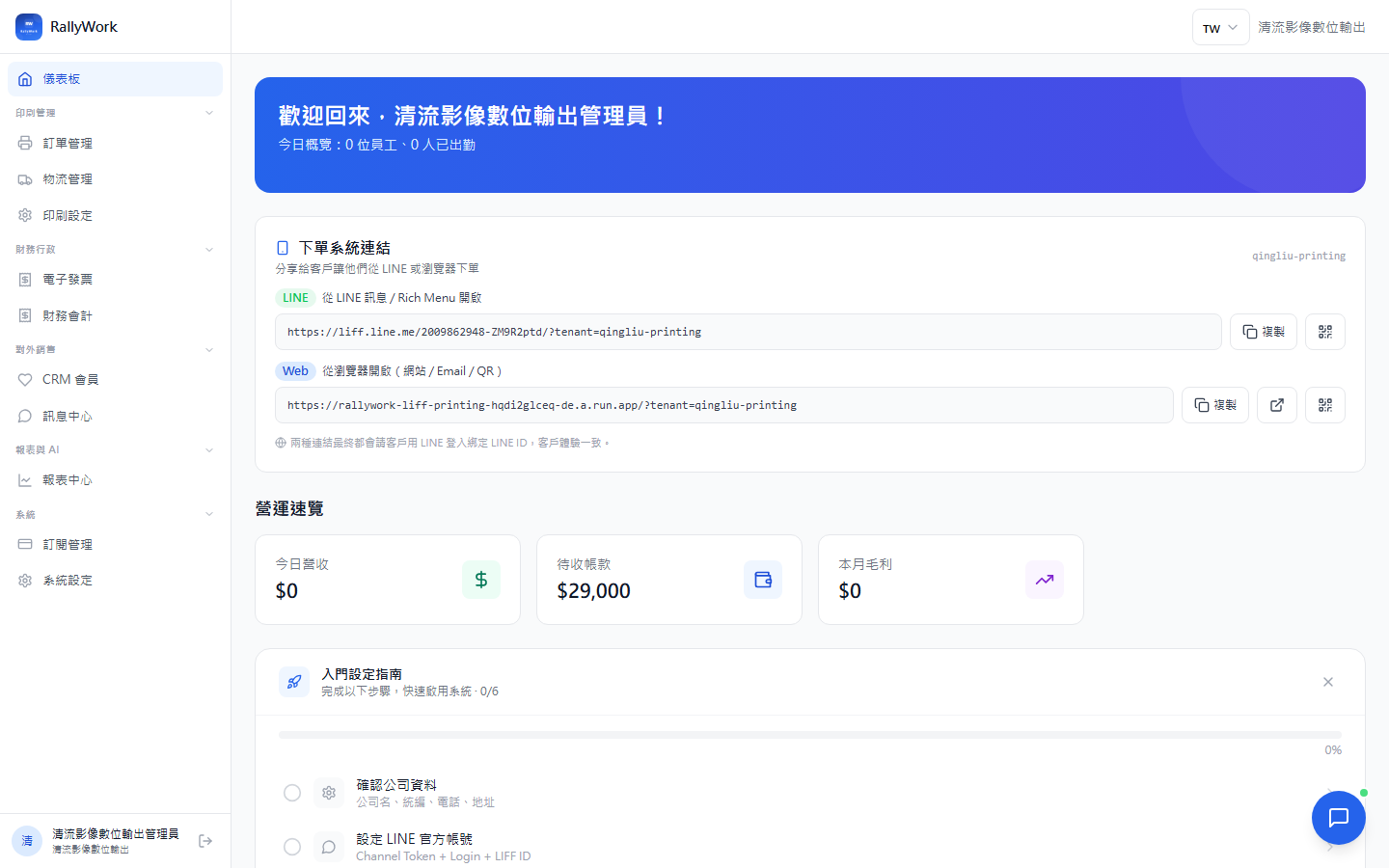
04What the system looks like (for fellow engineers / owners in the same industry)
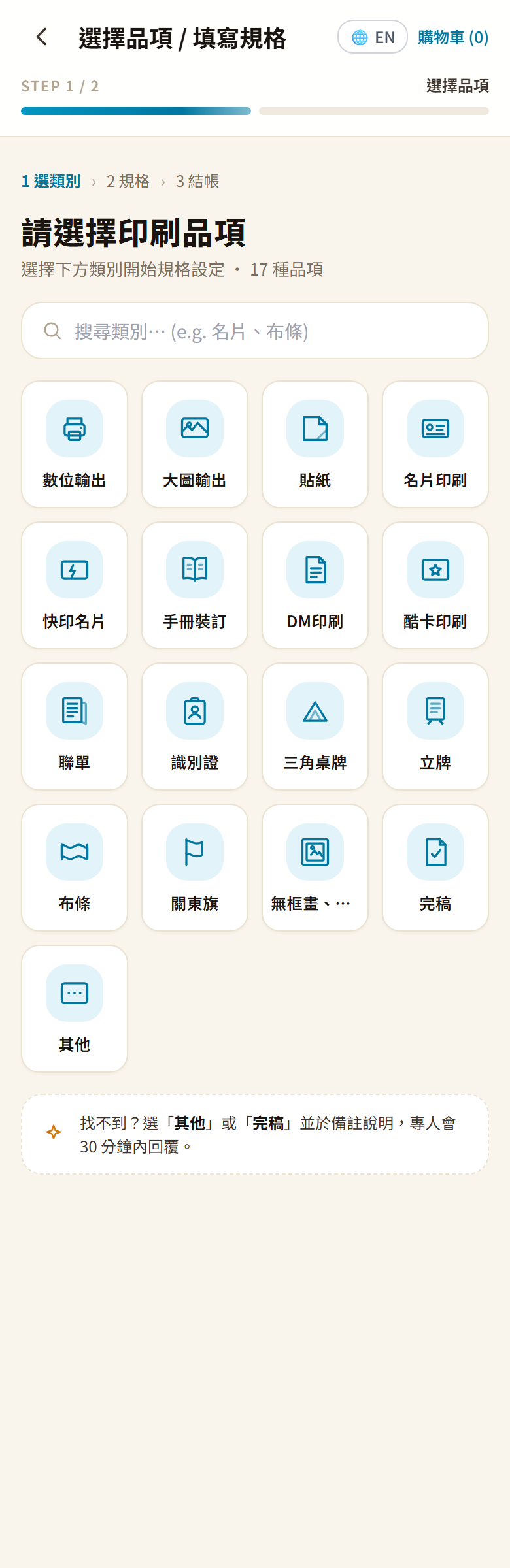
The 清流 system ended up with two sides:
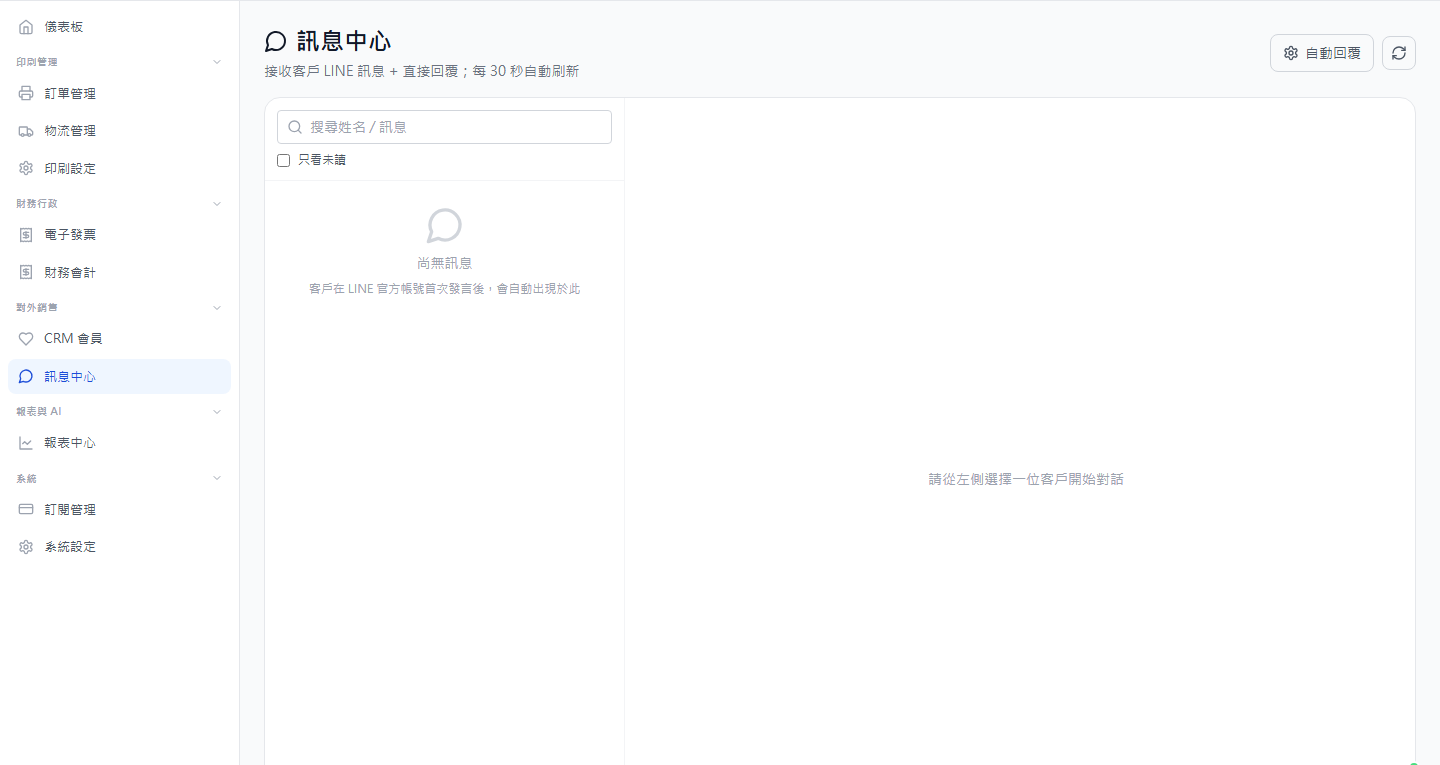
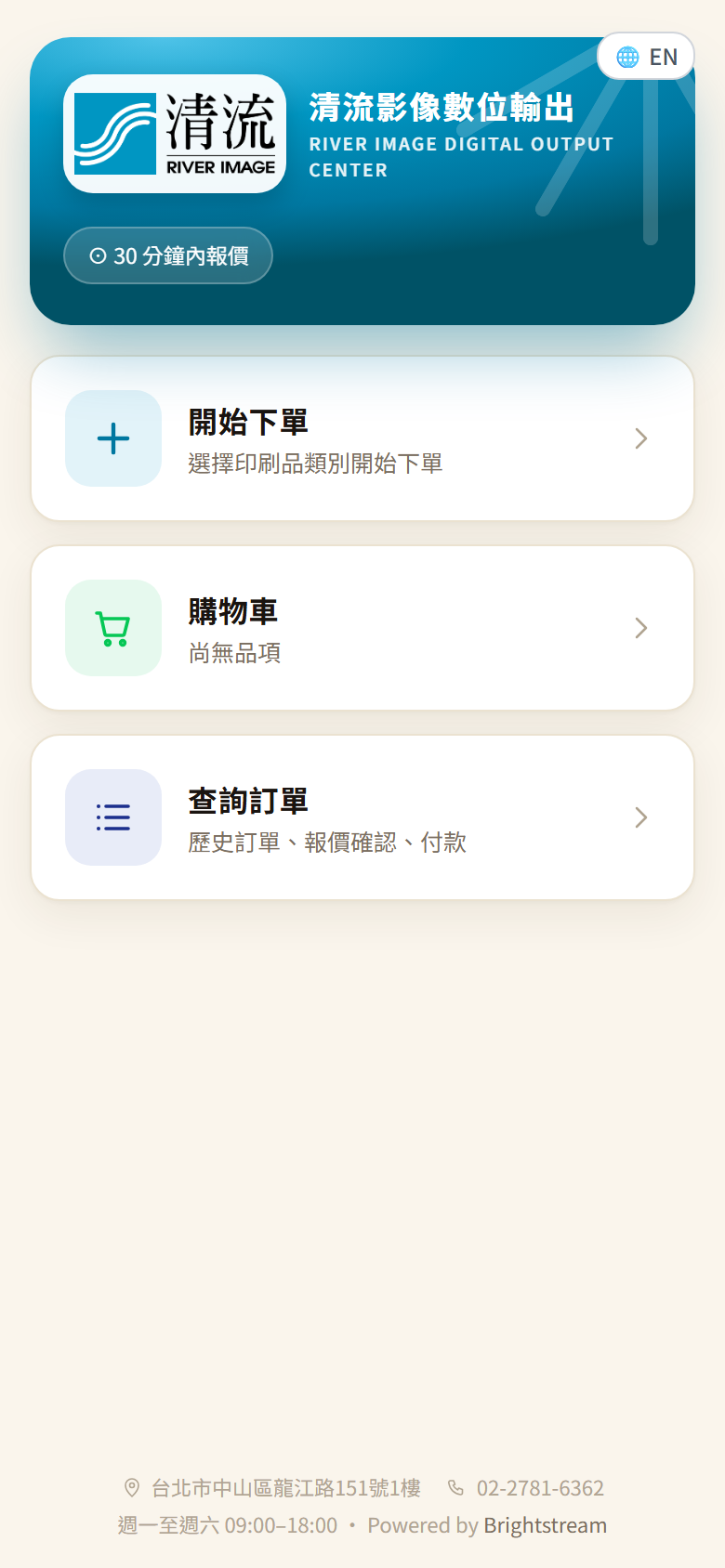
LIFF customer app (LIFF: LINE's in-app web app framework): 清流's downstream customers (ad agencies, brand marketing teams) come in through 清流's LINE Official Account → one-tap LIFF login → home page with 6 categories (business cards / flyers / posters / packaging / large-format printing / specialty printing) → choose paper stock / size / finishing / quantity → system calculates the price automatically → upload artwork → confirm order → real-time LINE notifications on order status. Customers never have to call or go back and forth by email.
- 14 paper stocks (from standard coated to specialty paper), 12 sizes, 6 finishing options, all expandable from the back office
- Each category has its own "spec tree" and quotation formula, defined by 清流's owner himself
- Customers can view past orders, track shipping, and reorder in one tap inside LIFF
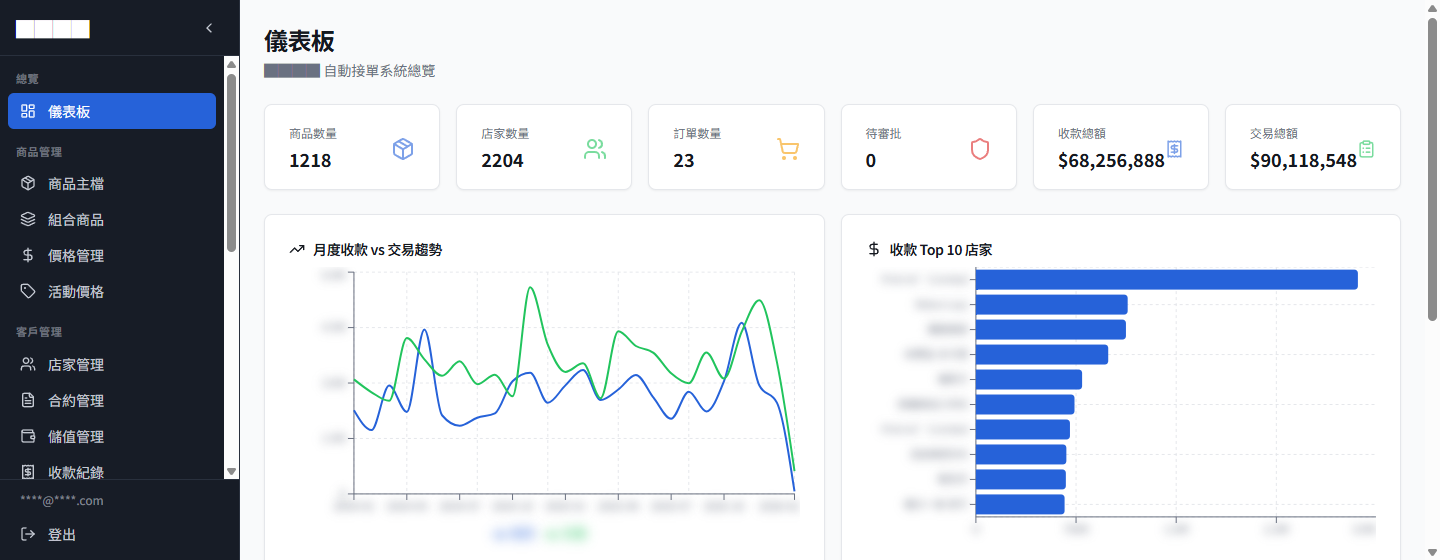
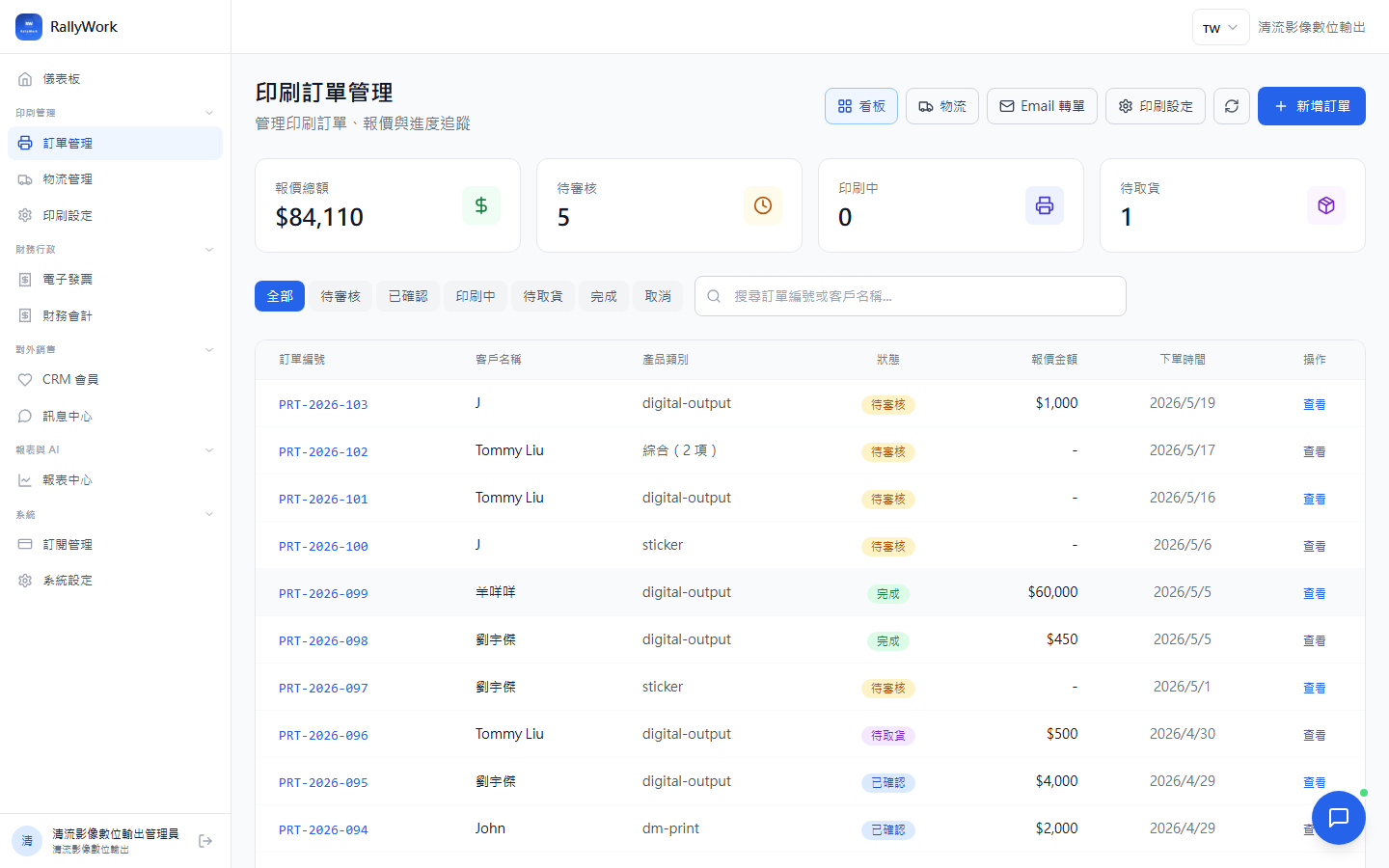
Owner / staff back office: order management (quotation → confirmation → job ticket → warehousing, four stages linked in one chain), live dashboard (this month's orders, conversion rate, profit by category at a glance), customer CRM, paper stock inventory (optional advanced module, off by default), shipping kanban (only the owner marks DELIVERED), monthly billing / reconciliation, sales commission calculation.
Every module was designed around 清流's actual workflow — not whatever the "printing ERP textbook" says should be there.
05How we work: the bug-kb system
After 清流 went live, it wasn't "delivered, done." We built a bug-kb process: the customer snaps a photo of the problem and sends it on LINE → we intake it right away and write it up as a yaml record → prioritize → after the fix, write a regression spec → customer confirms.
In April–May 2026 alone, 清流 logged 10+ records, including BUG-071 and 082-091. Every one is a real customer pain point. We've carried this process over to other clients too.
06Results
| 項目 | 內容 |
|---|---|
| Staff system adoption | Under 20% → 90%+ (previous 2 ERPs vs. Brightstream's delivery) |
| Quotation | 30 minutes by hand → calculated automatically by the system |
| Missed orders | Near 0 |
| Workflow automation | Over 80% |
| Customer ordering channel | Phone / email → LIFF self-service |
07The one part we didn't automate
Today 清流 runs over 80% automated — taking orders, quotation, scheduling, order tracking, shipping notifications, and customers placing orders online themselves.
Only one part isn't automated: the press operator taking the job ticket, running the machine, and printing the job.
We didn't touch that part, and we shouldn't. That's the operator's craft — the real value of this shop. The system's job is to take every chore around the operator off his plate, so he can focus on printing.
08What 清流印刷's owner says
"This is the first time I've felt the system works my way, instead of me bending to fit the system. Even our own quotation formula and the way we calculate specialty paper stocks — the system handles all of it." — Owner, 清流印刷
09From Johnny Yang
When an ERP fails, it's usually not because it lacks features. It's because it wants you to become what it expects.
清流 spent over NT$1,000,000 and failed twice to learn that. What I gave him wasn't a more powerful system. It was a system that works his way. Those are two very different things.
This is the first time I've felt the system works my way, instead of me bending to fit the system. Even our own quotation formula and the way we calculate specialty paper stocks — the system handles all of it.