"Johnny Yang, your quotation is three times the other one I got. So who's ripping me off?"
I've heard this at least twenty times. The owner is holding two or three quotations, the numbers are wildly different, and he can't tell why. Because the number on a quotation is never the "total cost". It's the "starting price".
I'm Johnny Yang. Seven years as a serial founder. My team has delivered 252+ projects across 32+ industries. This post lays out how ERP implementation cost is actually calculated, so you know what you're buying before you sign.
The short version: the number on the quotation is only the start
Most owners compare the "implementation fee". But what decides how much you spend in total are 3 variables that only surface after you sign: the scope of custom-built work, the complexity of data migration, and how maintenance is billed. If you don't pin these three down, a nice-looking number on the quotation means nothing.
The 3 variables that decide the total
Variable 1: custom-built scope — the more unusual your process, the higher the ceiling
Packaged ERP follows standard processes. Pricing is fairly transparent because everyone buys the same template. But once it involves "rebuilding around your process", the price stacks up with the depth of customization. Every extra piece of special logic is more engineering work: industry-specific pricing rules, data sync across multiple clinic branches, the know-how in your veteran employees' heads that needs to be put into the system.
The question isn't "how much". It's "which parts are standard modules, which parts are custom-built for me, and how is the custom work priced". (How much to customize, where the sweet spot is and where the money pit is, I cover in "Should your ERP be custom-built".)
Variable 2: data migration and integration — the mess in your old system is a big hidden cost
Many quotations don't include "how the old data gets moved" at all. Excel sheets, old systems, even paper records all have to be cleaned up before they can go into the new system. The hours this takes are usually underestimated, and it becomes the most common reason for an add-on budget mid-project.
I saw one project with a great-looking quotation up front. Halfway through implementation, they found that just consolidating three years of customer data from five Excel sheets in different formats added 40% to the original hours.
Variable 3: maintenance fee structure — the real long-term cost
The implementation fee is paid once. The maintenance fee is paid every year. Maintenance pricing varies a lot on the market. Some is warranty logic: "the system runs", and they fix it when it breaks. Some is partner logic: "ongoing optimization", with process details adjusted continuously at no extra charge.
This is how we do it: we charge a custom-built fee before implementation and a monthly maintenance fee after. As long as it's within the original spec, any detail improvements and optimizations you find while using the system are covered, free, on an ongoing basis. That money doesn't buy "fix it when it breaks". It buys "change with your business". When choosing a vendor, ask exactly what the maintenance fee covers. Otherwise in year two you'll be surprised by "that needs a separate quotation".
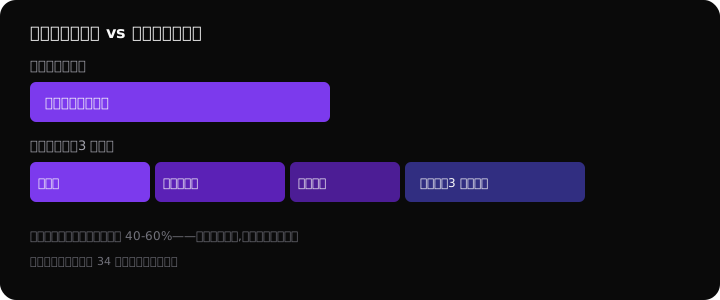
Quick reference: where three common quotation types hide costs
| Quotation type | How the starting price feels | Usually not included | Ask before signing |
|---|---|---|---|
| Packaged ERP | Low, standard modules are transparent | Custom features billed separately, data migration hours | "How do you price anything beyond the standard modules?" |
| Custom-built ERP | Mid to high, includes upfront interviews | Process and fees for requirement changes | "After go-live, if I want to change one process, what's the procedure and how much?" |
| Open source / low-cost | Very low, even free | Operations staff, security updates, custom development all need outside help | "Who maintains this afterwards? Who do I call when something breaks?" |
Before you sign, ask this out loud
I tell owners: whichever quotation you have, ask the vendor one question first: "One year after go-live, if I want to change one process, who do I go to, how long does it take, and how much does it cost?"
A vendor who answers clearly, with a defined process and pricing, sees you as a long-term partner. A vendor who can't answer, or brushes it off with "we'll see when we get there", is usually the kind that lets you bleed slowly through add-on budgets. (How to spot a vendor who'll rip you off at a glance: "What kind of vendor to choose for ERP implementation". The most common causes of failed implementations: "Why ERP implementations fail".)
Also remember: cheap is not the same as good value. A system nobody uses and nobody can change is 100% waste, however cheap. A system that costs a bit more but actually gets used and can be changed is the real budget truth.
FAQ
Q: What's the typical range for ERP implementation cost? A: It varies enormously, anywhere from a few hundred thousand to several million New Taiwan dollars. The key factors are customization depth and company size, not "this industry costs this much". Have the vendor actually come in and understand your process before talking price. Otherwise you're comparing numbers built on different baselines.
Q: What percentage of the implementation fee is maintenance usually? A: On the market, annual maintenance is commonly set as a percentage of the implementation fee. But the real question isn't the percentage. It's "what service scope does that percentage actually cover". Warranty-style and ongoing-optimization-style can cost the same number and buy very different things.
Q: Is a lower quotation always a trap? A: Not necessarily, but you must ask "what isn't included in this number". The usual hidden costs in low quotes are data migration, custom-built add-ons, and maintenance scope. Get those three answered first, and a low-cost option can be a good deal.
Q: Can we run a small pilot first, then decide on full implementation? A: Yes, and I recommend it. Pick the single most painful process in your company for the pilot. You'll usually see results in 6-12 weeks, then decide whether to expand. That keeps budget risk lowest.
Next steps
Want to know what your company's implementation should actually cost? Two paths:
- See more real cases: our library of 252+ projects. Find references in your industry and at your size.
- Book a free 30-minute diagnostic. Pick a time online that works for you, and I'll help you pin down a real budget range, not a vague starting price. You can also look at the AI ERP page, or start with "The complete ERP guide for SMEs", then read how regular ERP differs from AI ERP, how many people Excel can really handle, and how long ERP implementation takes.
Every Wednesday I also talk through this kind of inside story on my podcast 熊董不上班 ("Johnny Yang Doesn't Clock In"). The real stories behind the quotations are all in there.