A system built for years that never went live — we got it back for the client first, then rebuilt it — 蕬域方舟 Sylvarc
蕬域方舟 (Sylvarc)'s clinic system was stuck with a previous vendor and never went live in years. Brightstream first decoupled the code to give the system back to the client, then rewrote it from scratch as Sylvarc.
- Client
- 蕬域方舟 Sylvarc
- Industry
- Medical aesthetics / hair
- Service
- Custom web & apps
- Led by
- Johnny Yang
What we delivered.
- Two-phase delivery
- Step 1: code decoupling → Step 2: modern rewrite
01A system that was "almost done" for years
蕬域方舟 (Sylvarc) is a chain of scalp care clinics with locations in Taipei, Zhubei, Taichung, and Kaohsiung.
They wanted their own clinic management system early on: client records, treatment packages, treatment logs, inventory across multiple locations. They had thought it all through. They hired a vendor to build it.
The problem: the system was in development for years and never left "under construction." It never actually went live.
Every time they asked about progress, the answer was "almost done." "Almost done" lasted for years. The client's entire digital lifeline was stuck with a vendor they had no control over. You can see the system, but you can't touch it, you can't take it back, and you don't know when it will ever be finished.
02My diagnosis: the system wasn't the problem. The client didn't own it.
When I took on this project, my first call wasn't a technical one.
It was about ownership.
The biggest hidden risk in digital transformation isn't whether the system is good. It's that your lifeline is locked somewhere you can't control. Source code, domain, third-party service accounts: if these aren't in your hands, you're not the owner of the system. You're a tenant. Tenants don't get to decide when the house is finished.
So we did this project in two steps. The order matters.
03Step 1: Get the system back
The first thing we did was not write a single new feature.
It was decoupling: returning control of the system to the client.
- Removed the proprietary package dependencies the old vendor had buried in the system, so the code was no longer locked to that vendor
- Transferred the domain to the client's own hosting
- Rebuilt every third-party service, including Firebase and Google Calendar, under the client's own accounts
- Fully cloned the code repository from the vendor's git and moved it into the client's own GitHub org
- Dumped the DB schema from the vendor's PostgreSQL and deployed it to the client's own instance
Only after this step did Sylvarc actually own its system for the first time. From tenant to owner.
04Step 2: Build it again, and build it right
Once control was back, we rewrote the entire system on a modern stack. The new system is called Sylvarc (Next.js 16 + Prisma + PostgreSQL).
From the moment a client first walks into the clinic, to every treatment record, signature, package session deduction, and follow-up after that: the whole trail now closes the loop inside a system the client controls.
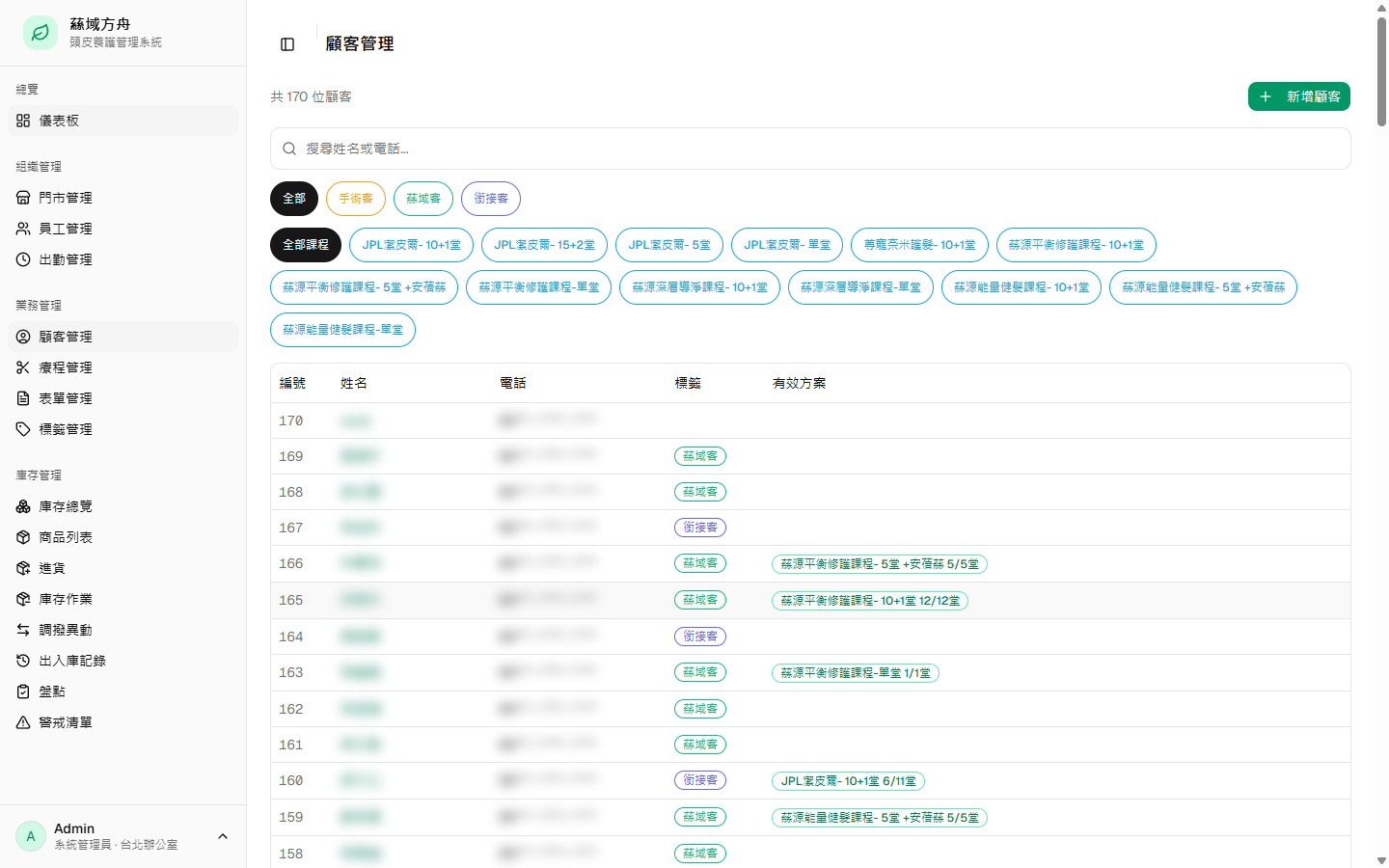
The actual build is 23+ data tables feeding 11 dashboard pages, covering three areas:
Organization management: 4 locations / staff with job titles and org structure / GPS-based clock-in / leave requests and approvals.
Business management: client CRM with dynamic tags (segments such as Active / Dormant / Close contact / 絲域), treatment package management (with session deduction tracking and gift receipts), per-treatment records + client e-signature confirmation, a dynamic form system (intake form / scalp health assessment questionnaire, designed by drag-and-drop in the dashboard), tag management.
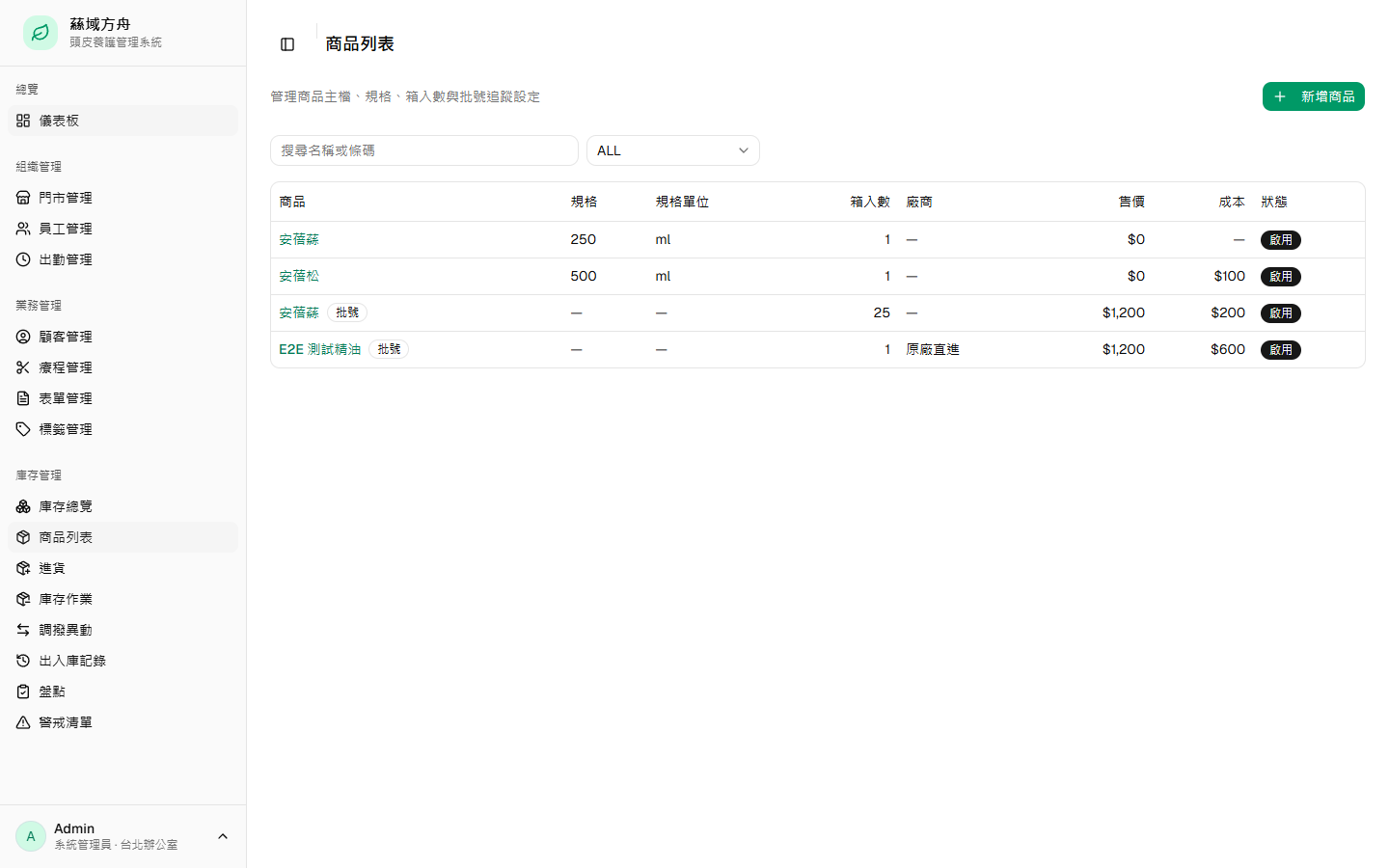
Inventory management: products (with variants / suppliers / price and cost), batch number and expiry tracking, stock in / stock out / transfers between locations, stock movement logs, stocktake details, alert list (low-stock warnings).
Every data table is designed around how a real clinic works. For example, package usage records don't just count sessions. They record which staff member, which location, and which treatment record used them, so you can trace back up to the original package and that client's full treatment history.
05Step 3: Keep iterating after launch
Since Sylvarc went live, it keeps changing based on real feedback from the client. For example:
- The client needed to manage different variants of the same product → we split out the ProductStockSetting model so each location can set its own low-stock threshold
- The attendance module originally only logged clock-ins; the client needed missed-punch corrections linked to leave → we added the AttendanceRequest model, putting punch corrections and leave in the same approval flow
- Dynamic forms originally had only a static schema; the client needed different questionnaires for new patients → we split out FormTemplate / FormInstance so new form versions can be designed by drag-and-drop in the dashboard
The system doesn't end at delivery. It grows with the clinic's operations.
06What Brightstream delivered
| 項目 | 內容 |
|---|---|
| Starting point | A system "under construction" for years, never launched, out of the client's control |
| Step 1 | Code decoupling, domain and third-party service transfer — the system handed back to the client |
| Step 2 | Modern rewrite as Sylvarc (Next.js 16 + Prisma): 23+ models / 11 dashboard pages / GPS clock-in / e-signatures / dynamic forms / multi-dimensional inventory |
| Step 3 | Ongoing iteration after launch (inventory Phase 2 in progress) |
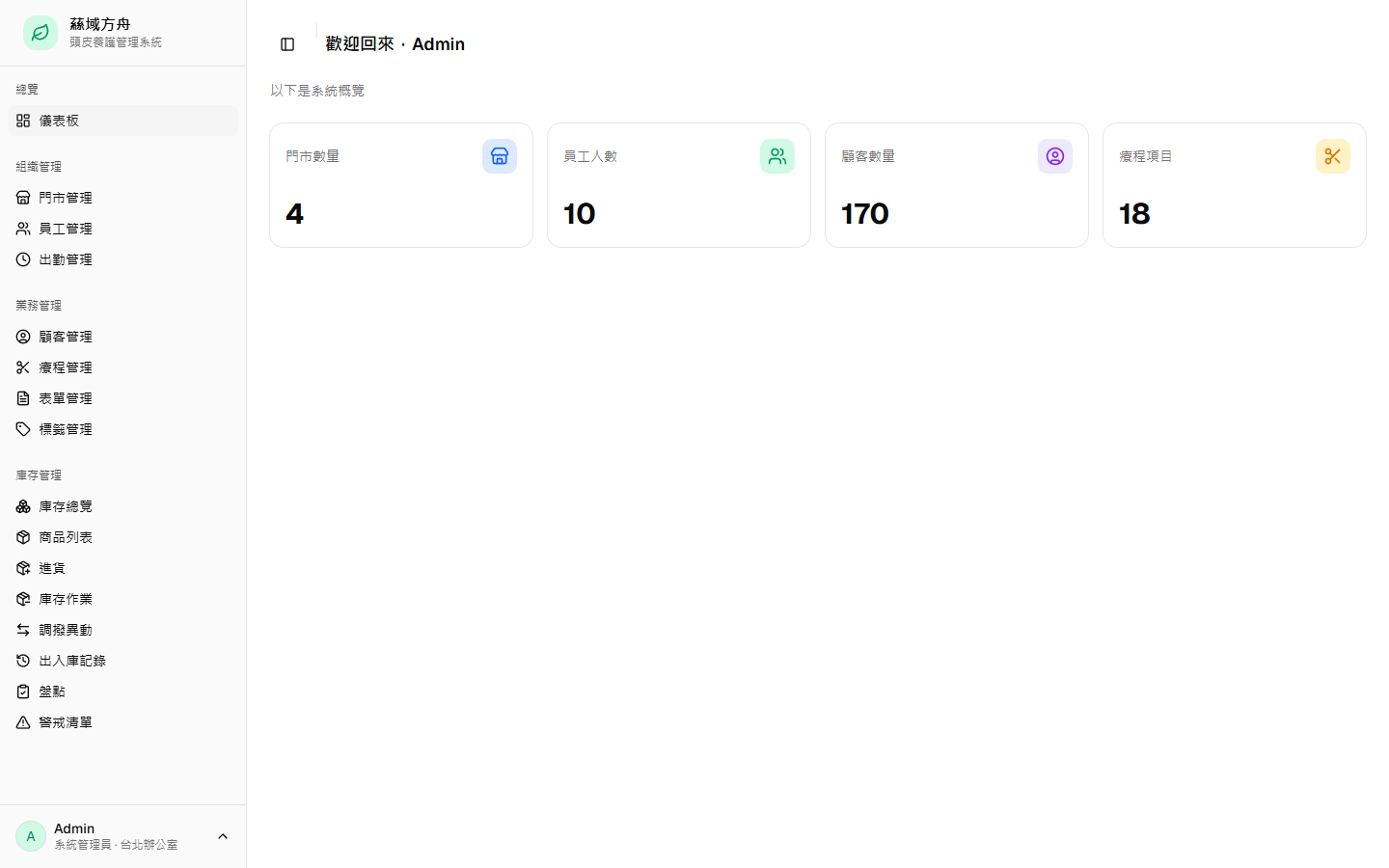
| Scale | 4 locations / 10 staff / 170 clients / 18 treatment types (actual figures from the system overview) |
| Status today | Fully controlled by the client. They are in charge. |
07What Sylvarc says
"The old system was always 'almost done,' and we couldn't do anything about it. Brightstream first made the system truly ours, then made it work. This time, we're the ones in control." — 蕬域方舟 Sylvarc (drafted by Brightstream, approved for publication)
08From Johnny Yang
A lot of owners pick a system by looking only at features. But no matter how many features it has, if the source code, domain, and accounts aren't in your hands, you're not the owner of that system.
When I took on the Sylvarc project, the first thing I did wasn't development. It was handing the system back to the client. Because the real foundation of digital transformation isn't features. It's ownership. A system you can't control, however well it's built, belongs to someone else.
The old system was always "almost done," and we couldn't do anything about it. Brightstream first made the system truly ours, then made it work. This time, we're the ones in control.