

“Acceptance? We wait for their system to go live, we use it, no problems, we sign. What else is there to write?”
I've heard this line in pre-signing meeting rooms more times than I can count. The owner says it casually, because in his head acceptance is a feeling. The system runs, people can use it, nobody's swearing at it. That means it passed.
The problem is that contracts don't run on feelings. When your contract doesn't define “acceptance,” here's what actually happens. Three months later the system goes live, but the warehouse inventory count is way off from what's on the shelves, month-end close won't run, and sales has gone back to writing orders in Excel. You say, “This can't count as accepted.” The vendor pulls out the meeting minutes and says, “Every feature was delivered. These are user-habit issues.” You want to hold back the final payment. He says the contract says payment on go-live, and the system is live.
That's the moment you find out the two of you never agreed on what “acceptance” meant. And when nothing is defined, whoever holds the system, the source code, and your data gets to decide what the definition is.
I'm Johnny Yang, Brightstream Technology, Taiwan. I've led implementation teams for seven years, across 252+ projects in 32+ industries. In the past few years, owners have dragged me in to look at contracts almost as often as they've dragged me in to look at quotations. Usually after things are already stuck. I'll be honest: read a quotation wrong and the worst case is you overpay. Write the acceptance clause wrong and you're stuck in a dead end where the money is paid, the system doesn't work, the vendor won't respond, and your legal position is weak.
Here's the conclusion up front.
The most valuable part of an ERP contract is not the price. It's the acceptance clause. An acceptance clause that protects you only needs to do five things: tie the acceptance standard to “real data running through one full business cycle,” not the vendor's demo; list the acceptance items as a checklist you can tick off line by line; spell out the correction period and the maximum number of correction rounds when acceptance fails; tie payment milestones to acceptance results, not to dates; start the warranty on the acceptance date, not the installation date or signing date. Get these five in and you cut most of your risk. And the vendor willing to work through these five in detail with you is usually the vendor who can actually deliver.
If acceptance isn't defined, you've handed the vendor all the control
First, a mindset problem. A lot of owners think of acceptance as the project's “final checkpoint.” The work is done, I check it, if it's OK it passes.
Wrong. The acceptance clause doesn't do its real work on that last day. It does its work throughout the entire project, as your only negotiating leverage.
Think about it. Once the project starts, what do you still have? A big chunk of the money is already paid: the signing payment, the spec-confirmation payment, the development payment. Together these are usually the bulk of the quotation. Your data is handed over. Your people are committed. Your old system may no longer be maintained. If the vendor drags its feet, the quality is poor, or every request gets labeled “that's custom-built, we'll quote it separately,” what can you do?
The only thing you can do is not accept.
But if the acceptance clause is loose, say it only reads “Upon completion of installation and testing by the Client with no errors found, the system shall be deemed accepted,” then who decides there are “no errors”? How long does “testing” last? If the Client keeps saying there are errors, could the Client be accused of refusing acceptance in bad faith?
The vaguer the clause, the more the right to interpret it shifts to whoever holds the system. That's not because vendors are bad. It's structural.
Go-live date, acceptance date, warranty start date: write these three separately
This is the first thing I look for in a contract, and most of the contracts I've seen blur them together.
Many contracts have only one date concept: “system go-live.” After go-live, the warranty starts, the final payment is due, and annual maintenance starts counting. This is extremely bad for you, for a simple reason: go-live only means the system has started running. It doesn't mean it's running correctly.
The right approach is to split it into three independent dates, each with its own definition and trigger:
The first is the go-live date (or official start date). Definition: the system is officially in use in the production environment, and the old process is stopped or running in parallel. What this day means is “risk starts moving into real operations,” not “the work is done.”
The second is the acceptance date (or acceptance pass date). Definition: after go-live and an agreed verification period, the day both parties confirm each item on the acceptance checklist in the contract appendix and sign the acceptance certificate. There must be a gap between go-live and acceptance. I usually recommend it cover at least one full month-end close cycle.
The third is the warranty start date. It should equal the acceptance date. Not the go-live date, and definitely not the installation date or signing date.
Why separate them? A practical example. Say the contract reads “one-year warranty, starting from the go-live date,” and your system goes live in March but month-end close doesn't run cleanly and acceptance isn't signed until June. You've just burned three months of warranty for nothing. And those three months are the ones with the most problems, because they get filed under “implementation period.” The vendor fixes bugs diligently, but the warranty clock is running. By the time the system is actually stable, you have nine months of warranty left.
I've seen worse: warranty starting from the signing date. With a clause like that, if implementation drags on for six months, half your warranty expires before you ever get to use it. If you see this, demand a change. There's nothing to negotiate here.
If you don't even know yet how long the project will take, read how to estimate an ERP implementation timeline first. Get the timeline down, and you'll know where each of these three dates should fall and how much buffer to leave between them.
Five acceptance conditions your ERP contract must include
OK, mindset covered. Now the practical part. These five are what I consider the minimum a small or mid-sized business should fight for when signing an ERP contract. You won't win every one. But you should raise every one, because how the vendor responds to these five is information in itself.
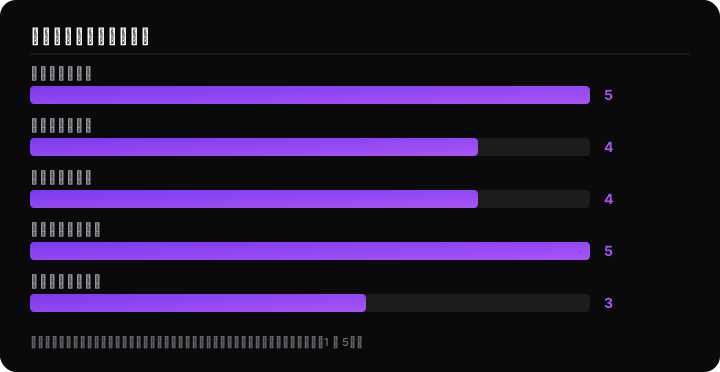
1. Acceptance means real data through a full business cycle, not a passed vendor demo
This is the most important of the five. If you can only fight for one, fight for this one.
What is the vendor's demo environment? Clean data, tidy part numbers and specs, five customers, documents flowing in a straight line. In that environment, every system is smooth.
What is your real environment? The same customer spelled three different ways, part numbers mixing full-width and half-width characters, an order revised several times, rush orders cutting the line every few days, and a pile of returns and allowances to offset at month end.
The difficulty gap between those two is about the gap between a practice test and the real national entrance exam.
So the acceptance clause must state clearly: acceptance testing must use the Client's real operating data, in the production environment or an environment with the same specs as production, and run a complete business cycle end to end.
What counts as a complete business cycle? For a trading company, roughly: quotation, sales order, purchasing, receiving, putting into stock, shipping, invoicing, receipts and payments, stock count, month-end close, financial statements. For a manufacturer, add work orders, material issue, production reporting, subcontracting, and costing in the middle.
Run the whole chain, and the numbers have to reconcile. That's what “the system works” means.
I know some vendors will push back, usually with “that makes acceptance too long” or “some processes depend on how fast your team works.” Those reasons are partly fair. What you can negotiate is scope and schedule. What you shouldn't negotiate is the principle. You can concede to “the main business cycles (listed by both parties in the appendix) must be completed; secondary processes go on a separate follow-up improvement list.” You cannot concede to “acceptance is based on a successful demo in the vendor's test environment.”
By the way, a lot of implementations fall apart in the last mile precisely because the acceptance standard stopped at demo level, and everything breaks the moment real data goes in. I cover this in more detail in why ERP implementations fail. Read the two together.
2. Acceptance items must be a line-by-line checklist, not “system functions normally”
“The system functions normally” is the most useless sentence you can put in an acceptance clause.
Because “normal” has no standard. Does the system opening count as normal? Does a report that runs but shows the wrong numbers count as normal? Does thirty seconds to process one document count as normal?
What you need is a checklist you can tick, not an adjective.
How to do it: in the body of the contract, write “Acceptance criteria are detailed in Appendix 1,” then make Appendix 1 an itemized table. Each line needs at least these fields:
- Item number and module
- Acceptance scenario: one sentence describing what to do, e.g. “Create a sales order with three line items, one of them a subcontracted part, and complete shipping and invoicing”
- Expected result: what the system should look like afterward, e.g. “Inventory deducted correctly, accounts receivable created, invoice numbers sequential, cost posted”
- Result: pass / fail
- Tester and date
Where does this list come from? Not the vendor alone, and not you alone. Both sides confirm it together after requirements interviews are finished. The best time to do this is the spec-confirmation stage, not the week before acceptance.
And one thing a lot of owners miss: the list must include cross-module items. Single-module functions are usually fine. Problems happen at the seams. After a shipment posts, is the receivable created? Does production material issue deduct inventory correctly? At month-end close, do the numbers across modules reconcile? If every line on your checklist only tests one module, you haven't tested the most dangerous parts.
Performance should also be on the list. One way to write it: “Under the Client's actual data volume, opening and saving main transaction screens shall complete within an acceptable response time,” and then define “acceptable” in the appendix as a specific number of seconds both sides agree on. I can't set that number for you, because data volumes and network setups vary too much between companies. But what you're fighting for is having a number at all, instead of no number.
3. Correction period and a cap on rounds when acceptance fails: without this, you get stalled indefinitely
Say acceptance fails. Then what?
Most contracts stop here. At most there's one line: “The Vendor shall make improvements as soon as possible.” How long is “as soon as possible”? Nobody knows.
So here's what happens in practice. You raise twenty issues. The vendor fixes twelve and says it's ready for re-testing. You test again and find three things that used to work are now broken, plus five new problems. Another round. Four or five rounds back and forth, six months gone, and your company is already doing business on this system. You can't go back.
The process for failed acceptance must be written as a loop with an end point. It needs at least four elements:
First, the format and deadline for defect notices. Within a set number of business days after acceptance testing ends, the Client lists the defects in writing or in the agreed project management system. This actually protects both sides. It stops you from adding new issues indefinitely after the fact.
Second, the correction period. Within a set number of business days after receiving the defect list, the Vendor completes the fixes and notifies the Client for re-testing. The number of days can be tiered by defect severity, for example “blocking,” “major,” and “minor,” with the shortest correction period for blocking defects.
Third, the scope of re-testing. Many people forget this one. Re-testing doesn't just cover the items that were fixed. It must include regression testing of related items that already passed. Otherwise you get the endless “fix A, break B” loop I described above.
Fourth, and most critical: the cap on correction rounds, and what happens when it's exceeded. Roughly: if the same acceptance cycle still fails after a set number of correction rounds, the Client may choose to (a) demand a price reduction, (b) terminate the contract and recover a set percentage of payments made, or (c) set a new deadline, with defined consequences if it's missed.
I need to be honest here: exactly how much gets refunded, how it's calculated, and what the legal effect of termination is all involve contract-law details, and every case is different. I'm not a lawyer. Have a lawyer confirm this part. My advice is that the contract should at least leave you a way out, instead of letting “acceptance not passed” become a state with no consequences. A clause with no consequences is the same as no clause.
4. Tie payment milestones to acceptance, not to dates
This one fits in a sentence, but of the five it has the most direct effect.
Look at the payment terms in the contract you have. Which kind is it?
Tied to dates: X% on signing, X% one month later, X% at go-live, final payment three months after that.
Tied to delivery: payment on signing, after the spec-confirmation document is signed, after system installation, after go-live.
Tied to acceptance: payment on signing, after the spec-confirmation document is signed, after go-live, and final payment after acceptance passes and the acceptance certificate is signed.
The third is the one you want.
What's the difference? With the first two, when the date arrives or the thing is delivered, you pay, whether or not it works. With the third, the money is tied to “it works.”
And the size of the final payment matters. If the final payment is only a small percentage, your acceptance clause has no teeth. The vendor can do the math, walk away from that money, pull its people, and you can't do anything about it. The final payment needs to be big enough that the vendor doesn't want to give it up. I won't give you a number, because it depends on the overall structure, project size, and each side's leverage. But the principle is: the final payment should be big enough that the vendor is willing to stay two extra months for it.
There's another milestone people often miss: the start date for annual maintenance fees. Some contracts read “a one-year warranty period starting from the go-live date, after which annual maintenance fees apply.” If the warranty starts at go-live, the warranty gets eaten by the tail end of implementation, and you start paying maintenance soon after. Annual maintenance should start after the warranty ends, and the warranty should start on the acceptance date. That chain has to hold together or you end up paying for an extra stretch.
If you want to work out the full payment structure alongside cost, see how to calculate ERP implementation cost. Put licenses, consultant days, and maintenance fees on one timeline and it gets much clearer where the payment milestones should fall.
5. Warranty starts on the acceptance date, not the installation or signing date
I covered why above. Here's how to write it in practice, and what else to agree on at the same time.
Beyond the start date, the warranty clause needs at least three more things:
Warranty scope. Spell out what the warranty covers. Bug fixes, definitely. Changes to your requirements? Those are billed separately, which is fair. But there's a gray zone in between: something written in the spec but implemented differently from what was expected. Is that a bug or a change request? If this isn't agreed, it becomes the most common fight late in the project. The recommended approach: the spec-confirmation document and acceptance checklist are the reference. Anything on the list that's implemented incorrectly falls under warranty.
Response and fix times. Tier it: system completely unusable is level 1, main functions unusable is level 2, minor issues are level 3. Agree on a response time and target fix time for each level. Note that “response” and “fix” are two different things. Many contracts only specify response time, which only guarantees someone picks up the phone.
What happens after the warranty ends. What annual maintenance covers, the cap on price increases, and “what happens if I don't renew.” That last question is extremely important. If you don't renew maintenance, does your system keep running? Can you export your data? This gets into exit clauses, but it's the same chain of logic as acceptance and warranty: you need to make sure that whenever any part of this breaks down, you still have somewhere to go.
Bad wording vs. good wording: the difference in one table
I've put the most common wordings into one table. You can hold it up directly against your contract.
| Clause | Common bad wording | Good wording to fight for |
|---|---|---|
| Acceptance standard | “System functions normally, tested by the Client with no errors” | “Per the acceptance checklist in Appendix 1, using the Client's real data in the production environment, run the agreed business cycles end to end and assess each item” |
| Acceptance environment | Not specified | “Production environment, or a test environment with equivalent specs, using the Client's actual data” |
| Acceptance period | “Seven days after go-live” | “After go-live, covering at least one full month-end close cycle; actual days per the project schedule” |
| Failed acceptance | “The Vendor shall make improvements as soon as possible” | “The Client submits a written defect list within X business days; the Vendor corrects and notifies for re-testing within X business days; re-testing includes regression testing; if the same cycle still fails after the agreed number of rounds, the Client may exercise its agreed rights” |
| Deemed acceptance | “If the Client raises no objection within seven days, acceptance is deemed passed” | “If the Client raises no written objection within the agreed period and the Vendor has issued a written reminder, items ‘tested with no objection’ are deemed passed; untested items are excluded” |
| Payment milestone | “Final payment due within thirty days after go-live” | “Final payment due within X days after acceptance passes and both parties sign the acceptance certificate” |
| Final payment size | So small the vendor won't miss it | Large enough to back up acceptance negotiations, tied to the acceptance certificate |
| Warranty start | “From the signing / installation / go-live date” | “From the acceptance pass date” |
| Warranty scope | “Correction of program errors” | “Any implementation that doesn't match functions in the spec-confirmation document and acceptance checklist is covered by warranty; requirement changes negotiated separately” |
| Fix time | “The Vendor shall handle it as soon as possible after notice” | Two separate numbers per defect level: “response time” and “fix time” |
You don't have to negotiate every line in this table. Pick the three or four you care about most. For the rest, even if the vendor won't change them, you'll know where your risk is. Knowing where your risk is and not knowing are two completely different things.
The most dangerous sentence: “If the Client raises no objection within seven days, acceptance is deemed passed”
This is called a deemed acceptance clause, and it's in almost every vendor-drafted contract. Conclusion first: this clause isn't unacceptable, but you almost never accept it as written.
First, why vendors want it. It's reasonable: they're afraid of clients who won't sign. Some clients just stall acceptance. The system clearly works, but they won't sign and won't pay the final installment. The vendor needs a mechanism to close the project. From that angle, deemed acceptance is a legitimate protection for the vendor.
The problem is in two parts: “seven days” and “raises no objection.”
The problem with seven days: can you test an ERP in seven days? If your acceptance standard is “run a full business cycle,” seven days can't even get you through one month-end close. The number of days contradicts the acceptance standard itself.
The problem with “raises no objection”: in what form? Does saying it out loud in a meeting count? Does replying “this looks off” in a LINE group count? If the form isn't agreed, both sides will tell different stories later.
There's a less visible problem too: what if the clock starts before testing has even begun? Say the vendor declares “the system was delivered on such-and-such date,” seven days quietly pass while you're busy with month-end shipping, and when you turn around to test, they say it's already deemed accepted.
So how do you negotiate this clause? I suggest three directions:
First, extend the period and align it with the acceptance standard. If acceptance requires a month-end close, the period can't be seven days. You can say: “I'm not asking to remove this clause. I'm asking to make it consistent with the acceptance standard above.” That usually goes through.
Second, define the start point clearly. The period should start on the day “the Vendor gives written notice that acceptance testing begins, and the Client confirms the test environment and data are ready,” not the delivery or installation date.
Third, add a “written reminder” and “limited scope.” Written reminder means: before the period runs out, the Vendor must send a written notice. Limited scope means: only items that were tested with no objection are deemed passed. Untested items don't pass automatically.
I'll be honest again here: how enforceable deemed acceptance clauses are in practice and how courts view them is a professional contract-law question. I'm not a lawyer and I won't cite statutes. Have a lawyer confirm this part. What I can give you is negotiating direction, not legal advice.
But one thing I can say for sure: when you raise these three points, the vendor's reaction will tell you a lot. The ones willing to adjust usually trust they can deliver. The ones who shut you down with “our standard contract can't be changed,” take note.
No legal team? Three things the owner can do personally
I know a lot of owners are thinking at this point: “All true, but our accountant also handles HR. Where would I get a legal team?”
That's real. So here are three things you can do without a legal team that have the biggest effect.
First: make the spec-confirmation document and acceptance checklist contract appendices
I think this has the highest return of anything here, and it takes zero legal expertise.
It's simple. During requirements interviews and spec confirmation, you're already producing a pile of documents: requirement lists, process flows, report formats, field definitions. All you have to do is require these documents be attached as contract appendices, and write in the contract body “Acceptance criteria are per Appendix X.”
Why does this matter so much? Because most ERP project disputes aren't legal disputes. They're factual disputes about “what exactly did we agree to build.” And factual disputes are won by whoever has it in writing.
Without appendices, a dispute is your word against theirs. With appendices, a dispute is flipping pages and comparing.
And if your project has custom-built parts, this matters three times as much. Custom requirements are the easiest to turn into “that's not in the original scope” late in the project, and the only thing that blocks that sentence is the original spec documents. I covered these traps in should your ERP be custom-built. Worth reading before you sign.
Second: draw your own timeline and mark the three dates and payment milestones
Take a sheet of A4 paper and draw a line across it. Starting from signing, mark these points:
Signing date → Spec confirmation → System build → Training → Go-live date → Verification period → Acceptance date → Warranty period → Warranty ends → Annual maintenance starts
Then under each point write: How much do I pay on this day? What should be delivered on this day?
Once it's drawn, you'll see the problems right away. The three most common: all the payment milestones are bunched in the first half; the acceptance date doesn't appear on the timeline at all; the warranty starts at go-live instead of acceptance.
Fifteen minutes drawing this yourself is worth reading the contract three times. Contracts are written in text, and text hides structure. Draw it and the structure shows up.
Afterward, take the drawing to the vendor: “This is how I understand it. Can you confirm it's right?” Ask that, and a lot of hidden assumptions surface on the spot.
Third: pay a lawyer to review the three to five most critical sentences
You don't need a lawyer to review the whole contract. That fee is a heavy load for a small business, and lawyers don't know ERP, so reading the whole thing they may not catch what matters.
The more efficient approach: you yourself (or using this article as a checklist) circle the critical clauses first: acceptance standard, failed-acceptance handling, payment milestones, warranty start, deemed acceptance, exit clauses. Then take just those to a lawyer.
Ask specific questions. Don't ask “Is there anything wrong with this contract?” Ask “If there's a dispute over this clause later, does it favor us or hurt us? Is there safer wording?”
That way the lawyer's time goes where it counts, and your fee stays under control. I'm not a lawyer. This article gives you practical negotiating directions and checkpoints. The actual legal effect must be confirmed by a lawyer. I need to say that clearly, or I'd be overstepping.
Honestly: a vendor willing to write detailed acceptance terms is proving it isn't afraid of being tested
I hesitated over whether to write this section, because it doesn't entirely favor my own industry. I'm writing it anyway.
When you take these five conditions to a vendor, you'll get one of two reactions.
The first reaction is defensive. “That's too much risk for us.” “Our standard contract can't be changed.” “No client has ever asked for this.” “Written like that, we'll never close the project.”
The second reaction is discussion. “I understand your concern on this one. I agree seven days is too short, let's make it one month-end close cycle. But I'd like the correction cap at four rounds instead of three, because some defects can't be fixed until your data is complete.”
The second reaction is the vendor you're looking for.
The reason is simple. A vendor who can actually deliver has a clear sense of whether the project will pass. He knows his system runs, knows his consultants have experience, knows what problems a project this size usually hits. So detailed acceptance terms aren't a threat to him. They're laying out the rules of the game. They even work in his favor, because clear rules block a client from adding requirements forever.
On the other hand, a vendor unsure about delivery fears nothing more than clear standards. Because clear standards kill the line “that's close enough, right?”
So I often tell owners: the acceptance clause isn't just a tool to protect you. It's also a filter. Put these five on the table before signing, and the vendor's reaction will tell you more honestly than any slide deck or demo whether they can actually do the job.
And here's something that doesn't favor my own industry: if a vendor won't even agree to “acceptance only counts after a full business cycle on your real data,” you're better off not signing. What you save isn't just money. It's a year of sleep.
As for how to read a vendor's quality before you get to the contract, beyond their reaction to acceptance terms there are earlier signals to watch. I've put them in how to choose an ERP vendor. Read it with this one and you'll be on much firmer ground at the signing table.
Frequently asked questions
Does a lawyer have to write the ERP acceptance clause? Can I write it myself?
You know the content of the acceptance clause best, because only you know what your company's business cycle looks like, which processes can't break, and which reports the owner checks every day. Writing that part yourself, or listing it with the vendor, is actually more accurate than having a lawyer write it.
But the legal effect of the clause, such as what you can claim when acceptance fails, the conditions and consequences of termination, and how enforceable deemed acceptance is, should be confirmed by a lawyer. The practical approach: write the business content first, meaning acceptance standards, the checklist, and the failure process, then take the three to five most critical clauses to a lawyer. Costs stay under control and it works best. Don't do it the other way around. A lawyer doesn't know ERP and can't tell you what “running a full business cycle” concretely means at your company.
Do the go-live date and acceptance date really have to be separate? Will the vendor refuse?
They must be separate, and this is easier to negotiate than you'd think. Go-live is the system starting to run in the real environment. Acceptance is confirming it runs correctly. There naturally needs to be an observation period between the two, especially since many ERP problems only show up at month-end close.
Will the vendor agree? Most will, but they'll care about two things: whether this period can be stretched forever, and whether problems during this period count against the warranty. You can address both up front: write down the length of the verification period explicitly (e.g. covering one full month-end close cycle), and agree that defects found during verification go through the acceptance process and don't use up warranty time. Say it up front and the vendor usually won't fight you on this.
Who should write the acceptance checklist? Can I just use the vendor's template?
Both sides should confirm the checklist, but you should be the one driving it. I've seen plenty of vendor acceptance templates. The problem usually isn't dishonesty. It's that they're too module-by-module: line after line checking whether each function operates, with very little covering cross-module seams or overall month-end verification. That's exactly where things break.
A better approach: have the vendor give you the template as a draft, then get the people in your company who know the processes best, usually your senior warehouse lead, accountant, and production planner, to add “situations our company actually runs into” line by line. Rush orders cutting the line, returns and exchanges, cross-month adjustments, transfers between warehouses. Add these scenarios and the checklist is written for your company, not for a generic company.
Can I ask to delete “acceptance is deemed passed if no objection is raised within seven days”?
You can ask, but I don't recommend making deletion the goal. The clause legitimately protects the vendor, and insisting on removing it can easily stall negotiations. The more practical approach is to fix it, not delete it: extend the period to match your acceptance standard, change the start point to the day “the test environment and data are ready and the Vendor gives written notice that testing begins,” add a written reminder step, and limit “deemed passed” to items that were tested with no objection.
After those changes, the clause still protects the vendor against stalling, and it's no longer a trap for you. As for how legally enforceable these changes are, have a lawyer confirm before you finalize.
How large should the final payment be to protect me? Is there a standard percentage?
I won't give you a percentage. Project size, number of modules, how much is custom-built, and vendor size all affect what a reasonable payment structure looks like. Any number I give you just becomes the wrong anchor.
But I can give you the principle: the final payment should be big enough that the vendor is willing to stay two extra months for it. Work backward from that. If the vendor walks away from the final payment at the end of the project, would the loss hurt enough to make him stay and fix the problems instead? If not, the final payment is too small. One more often-missed detail: the final payment should be tied to “after the acceptance certificate is signed,” not “within X days after go-live.” However large the percentage, if it's tied to a date instead of acceptance, it still has no teeth.
Finally: before you sign, you only get this one chance
The acceptance clause has one brutal property: it can only be negotiated before signing. After that, there's no room at all.
You can negotiate a discount on the quotation later. You can buy more modules later. If consultant days run short, you can add more. Only the acceptance clause, once signed, is the text you live inside until the project ends.
So before you sign, spending two hours going through these five, circling them, and running one round of negotiation with the vendor is, I think, the highest-return two hours of the entire ERP project. If it works, you save six months of arguments. If it doesn't, at least you know what you're taking on when you sign.
Taking on risk knowingly and walking into it blind are two completely different things.
If you're stuck right here, with a contract in hand, able to read it but unable to see where the traps are, and a vendor pushing you to sign this week, start by pulling out the acceptance and payment clauses and running them against this article's checklist. Where you're still unsure, send me your situation. I'll use the experience of all the projects my team has done to tell you which clauses must change and which ones you can let go. You don't need to decide first whether to use our system. This has nothing to do with selling anything. Every owner who avoids one trap in a contract means one fewer “ERP is all a scam” story in this industry.